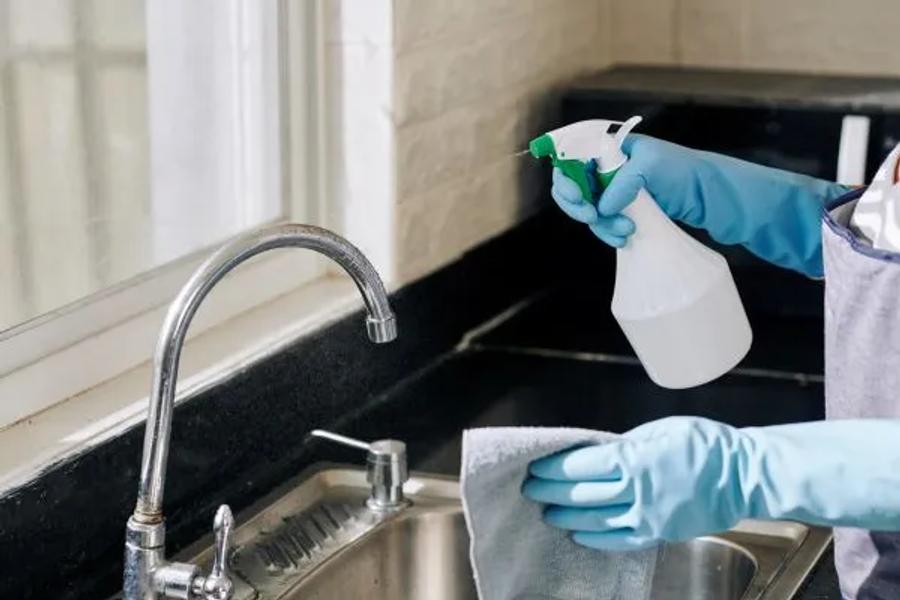
Most homes look clean on the surface. The counters are wiped. The floors are swept. The bathroom smells fine. But after years of doing professional cleaning across Utah — walking into hundreds of homes that their owners considered clean — I can tell you that surface clean and actually clean are two very different things.
The areas you don't think about are almost always the dirtiest. Not because homeowners are careless, but because daily life pulls your attention to what's visible. The dust behind the refrigerator, the grime inside the oven, the mold growing on a shower door seal you've never touched — none of that shows up in your line of sight. It builds quietly, over months, sometimes years.
That's exactly what a professional deep clean is designed to address. Not the surfaces you already wipe. The places you don't.
A regular cleaning maintains what's already in decent shape. A professional cleans the floor, wipes the counters, scrubs the toilet, and keeps the home at a consistent baseline. It works well when done on a recurring schedule.
A deep clean is different. It's not just a longer version of a regular clean. It's a top-to-bottom reset that targets built-up grime, hidden dirt, and areas that never get touched during routine maintenance. Think of it this way: a regular clean keeps your home looking clean. A deep clean makes it actually clean.
Most homes need a deep clean at least once or twice a year — and absolutely before starting any recurring cleaning schedule for the first time. Trying to maintain a home that hasn't been deep cleaned is like mopping on top of a dirty floor. You're moving the mess around, not removing it.
The kitchen is where the most build-up happens, and it's the room where most homeowners underestimate how much gets missed in day-to-day cleaning.
A deep clean in the kitchen covers:
The inside of a refrigerator is one of the most commonly skipped areas in any home. Most people wipe the shelves occasionally, but the door gasket — that rubber seal around the edge — collects mold and food debris in the folds. If you've never cleaned it, go look. It's almost always black inside those folds.
Bathrooms get wiped down regularly in most homes. But wiping is not the same as scrubbing, and scrubbing is not the same as a proper deep clean.
A bathroom deep clean covers:
Shower door tracks collect hair, soap scum, and standing moisture constantly. In Utah's hard water areas — including Lehi, Eagle Mountain, and Saratoga Springs — mineral build-up makes this even worse. That chalky white residue in your shower isn't just cosmetic. It's a sign of calcium and magnesium deposits that harden over time and become very difficult to remove if left too long.
Bedrooms look clean because they're less cluttered than other rooms. But they're actually one of the dustiest spaces in any home. We spend roughly a third of our lives in them, shedding skin cells and hair. Fabrics — curtains, mattresses, upholstery — trap allergens in ways that hard surfaces don't.
A bedroom deep clean covers:
Ceiling fan blades in most homes carry a visible layer of dust that falls directly onto the bed and into the air every time the fan runs. This is a direct allergen source for anyone sleeping in the room, especially children. It's one of those things that gets cleaned once during a deep clean, and homeowners are genuinely surprised how much came off.
Living rooms see constant use but rarely get the kind of cleaning that actually removes what's built up inside cushions, along baseboards, and in the corners.
A living area deep clean covers:
Sofa cushion crevices are one of the biggest allergen traps in any living room. Crumbs, pet hair, skin cells, and dust mites all collect in the folds. A vacuum attachment gets the top. A proper deep clean removes what's worked its way into the fabric and underneath.
These rooms get almost no attention in most homes, and they're often the source of mold and air quality problems people can't trace.
A deep clean here covers:
The washing machine door seal is the most reliably moldy surface in any home. Pull back the rubber gasket on a front-loading washer that's never been cleaned — the black mold inside is consistent. It goes directly into the drum with every load. That's going into your clothes.
Here's a simple test. Walk through your home and check these five spots:
If more than two of those are visibly dirty, your home needs a first-time deep clean before any regular maintenance schedule will be effective.
Based on what I've seen across homes in Utah — from Salt Lake City and Draper to Provo and West Jordan — here are the situations that consistently call for one:
People sometimes book a regular clean expecting deep clean results, and then wonder why the grout still looks dark and the oven still smells. The scope of the two services is genuinely different.
A regular clean keeps surfaces maintained. A deep clean removes what's been building up underneath regular maintenance — and often underneath the surface itself. It takes longer, covers more, and requires different products and tools for different problems.
Once a deep clean is done, a regular bi-weekly or weekly cleaning schedule keeps the home in that condition. The two work together. One without the other doesn't hold.
If your home hasn't had a proper deep clean recently — or ever — now is the right time. Bee Neat Cleaning Co. provides professional deep cleaning for homes across Utah, including Lehi, Provo, Sandy, Herriman, Highland, Alpine, and South Jordan.
We're fully licensed and bonded, and our team is trained to clean the spots that most people miss. Book your first-time deep clean or get a free quote — no commitment, just an honest look at what your home needs.
A deep clean covers areas that regular maintenance skips — inside appliances, grout lines, washing machine seals, behind furniture, ceiling fans, window tracks, and baseboards throughout. It's a full reset, not just a thorough version of a standard clean.
Most homes benefit from a deep clean once or twice a year, in addition to regular recurring cleaning. If you're starting professional cleaning for the first time, always begin with a deep clean before moving to a maintenance schedule.
Yes. Regular cleaning maintains what's visible. A deep clean targets what your routine misses — and there's always something. Even well-maintained homes have build-up in areas that don't get attention during routine cleaning.
Lorem ipsum dolor sit amet, consectetur adipiscing elit. Suspendisse varius enim in eros elementum tristique. Duis cursus, mi quis viverra ornare, eros dolor interdum nulla, ut commodo diam libero vitae erat. Aenean faucibus nibh et justo cursus id rutrum lorem imperdiet. Nunc ut sem vitae risus tristique posuere.
Lorem ipsum dolor sit amet, consectetur adipiscing elit. Suspendisse varius enim in eros elementum tristique. Duis cursus, mi quis viverra ornare, eros dolor interdum nulla, ut commodo diam libero vitae erat. Aenean faucibus nibh et justo cursus id rutrum lorem imperdiet. Nunc ut sem vitae risus tristique posuere.
Bee Neat Cleaning Co has been a family owned business in Utah since 2000. Twenty-six years, same family, still cleaning homes across Utah County and the Salt Lake Valley. We show up when we said we would, we clean the things people forget to ask about, and we leave your house the way we would want ours left.